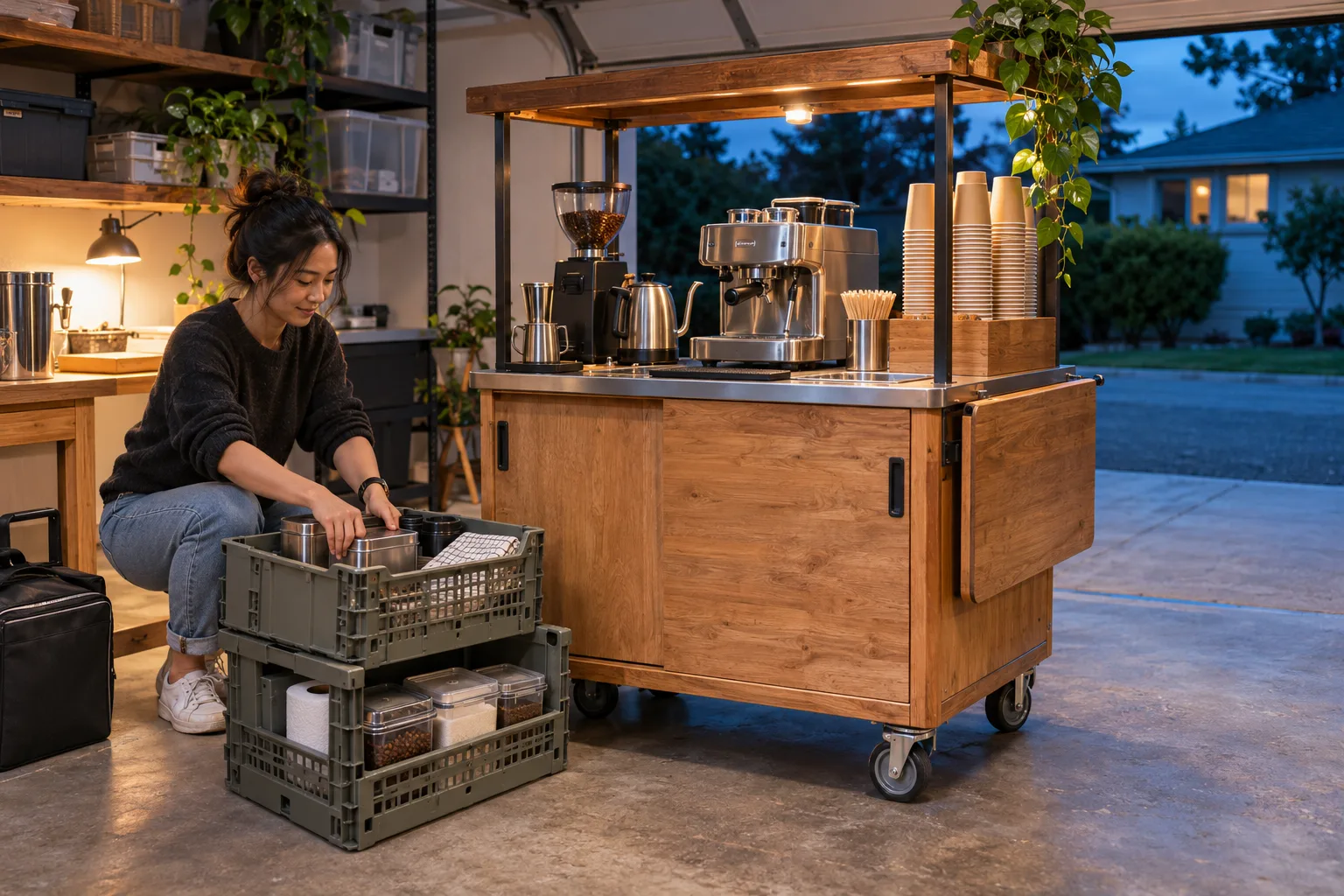
A weekend food business gives you a way to test entrepreneurship while maintaining another source of income. One Saturday market, a private coffee booking or a preorder bakery service may fit your schedule better than a truck that must trade every day.
Design the business around the time you genuinely have available.
PICK A BUSINESS WITH A PREDICTABLE SERVICE WINDOW
| Business concept | Possible schedule |
|---|---|
| Approved preorder bakery | Weekly order cutoff and Saturday pickup |
| Coffee cart | Private brunch or morning event |
| Charcuterie cart | Prebooked weekend celebrations |
| Lemonade stand | Seasonal market or approved community event |
| Dessert cart | Defined private party service |
| Hot dog cart | Regular approved weekend vending location |
These models still need the appropriate licenses, preparation arrangements and venue permissions. Check your employment agreement and any relevant workplace policies before starting a side business.
PUT ALL THE WORK ON THE CALENDAR
An example week for a Saturday booking might include confirming orders on Tuesday, purchasing supplies on Thursday, preparing and packing on Friday, serving on Saturday and cleaning and reviewing sales afterward.
Count every hour. Travel, administration, ingredient shopping and equipment maintenance are part of the business. Avoid a menu that requires preparation you cannot reliably complete alongside your regular job.
TEST THE FINANCIAL RESULT
Imagine two weekend events in a month. Each generates $600 in revenue and incurs $230 in food, packaging and booking costs plus $100 in travel and allocated overhead.
Before owner labor and income taxes, the example leaves $540 for the month. If the two events and preparation require 24 hours altogether, that is $22.50 per hour before taxes and other omitted costs. Valuing your time at $20 per hour leaves $60 after that labor allowance.
Use your own figures. A side business may be worthwhile for experience, creative enjoyment or long-term potential, but the economics should be clear.
PRESERVE YOUR SAVINGS
Set a startup spending limit and keep personal emergency funds separate. Test demand through a permitted setup before financing a truck. Obtain quotes for insurance, facilities and equipment, and keep records of income and expenses from the first sale.
The IRS provides guidance for part-time self-employment and estimated tax obligations. Consult it or an appropriate tax professional when setting aside tax funds.
DECIDE WHEN TO EXPAND
After several bookings, review actual hourly return, repeat inquiries, available weekends and the remaining cash reserve. Add service dates only when you can fulfill them dependably. Your existing income can give you the flexibility to refine the business without needing every event to succeed.