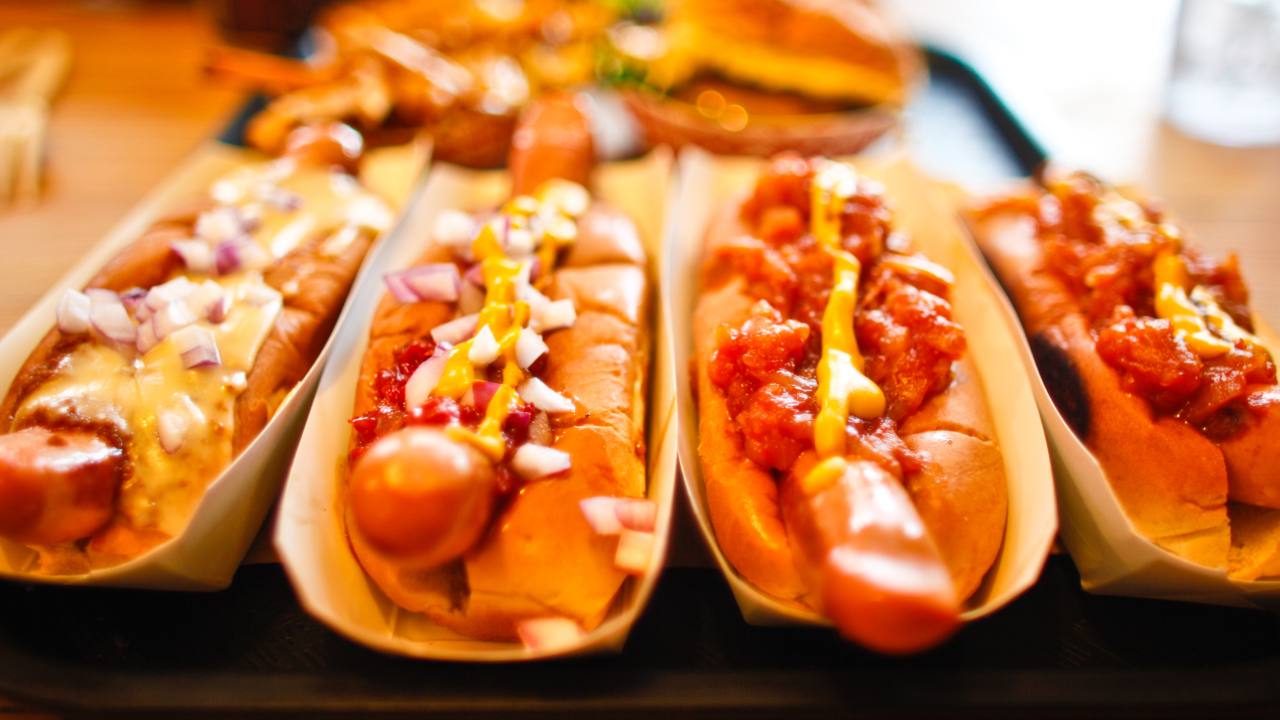
A hot dog cart has a straightforward appeal: customers can understand the menu quickly, service can be efficient and a small selection of ingredients can produce several distinct options. That can make it a good concept to investigate for a first mobile business.
The key is choosing an approved cart and a location where enough customers want a quick meal.
DECIDE WHAT YOU WILL SERVE
A starter menu might include a classic dog, a signature specialty dog, chips and a bottled drink. A combo gives customers a convenient choice. More toppings or cooked sides can increase preparation, storage and equipment requirements, so review the menu carefully before expanding it.
Calculate the cost of a complete order, including the bun, toppings, condiments, napkins, packaging and anticipated waste. Use supplier prices rather than grocery-store estimates if you plan to purchase commercially.
CHECK THE CART REQUIREMENTS
Speak with your health department about the type of food you will handle, whether cooking or reheating takes place on the cart, where food is stored and where preparation occurs. Ask about water, wastewater, handwashing, temperature control, commissary requirements and inspections. Where fuel or cooking equipment is used, consult the relevant fire authority.
A cart advertised as suitable for food vending may need alterations or may only be approved for a restricted menu. Obtain requirements before buying.
FIND LOCATIONS WITH A REASON TO STOP
An industrial area with limited lunch choices, an approved community event, a sports venue or a local business hosting employees may offer a suitable audience. Contact the property owner and the relevant local authority about vending permission.
Count people during the service period and observe existing food options. Ask the organizer what other vendors are expected. A location with a smaller regular audience can sometimes be more useful than an expensive one-time event.
HOW MANY ORDERS DO YOU NEED?
Suppose your average order is $8, ingredients and packaging cost $2.80 per order, and you estimate $0.24 in payment fees. Each order contributes $4.96 toward fixed service expenses.
If site fees, labor, travel and allocated overhead for the day total $248, you need 50 orders to cover those assumed costs. At 80 orders, the remaining amount would be $148.80 before income taxes and other unlisted expenses.
This is an example of break-even math, not a claim about average hot dog cart income. Use your own ingredient prices and expected customer mix.
CREATE A REGULAR SERVICE
Post your location and operating hours where customers can find them. Make the menu readable from the queue. Keep a count of what sells, and record the actual time spent shopping, preparing, serving and cleaning.
FREQUENTLY ASKED QUESTIONS
Can you sell anywhere you can park? You need the relevant site permission and local approvals. Public spaces may have separate vending rules.
Should you start with a large menu? A focused menu makes quantities and service capacity easier to measure.
Do you need a full truck? A properly approved cart may meet the needs of a limited menu. Check the requirements for your operation.
See the JavaMobile hot dog demo for a compact online menu and mobile storefront.